
· 15 min read · Leadership Interviews
Building Leadership on Education, Merit, and Courage: The Vision of Diana Mardarovici
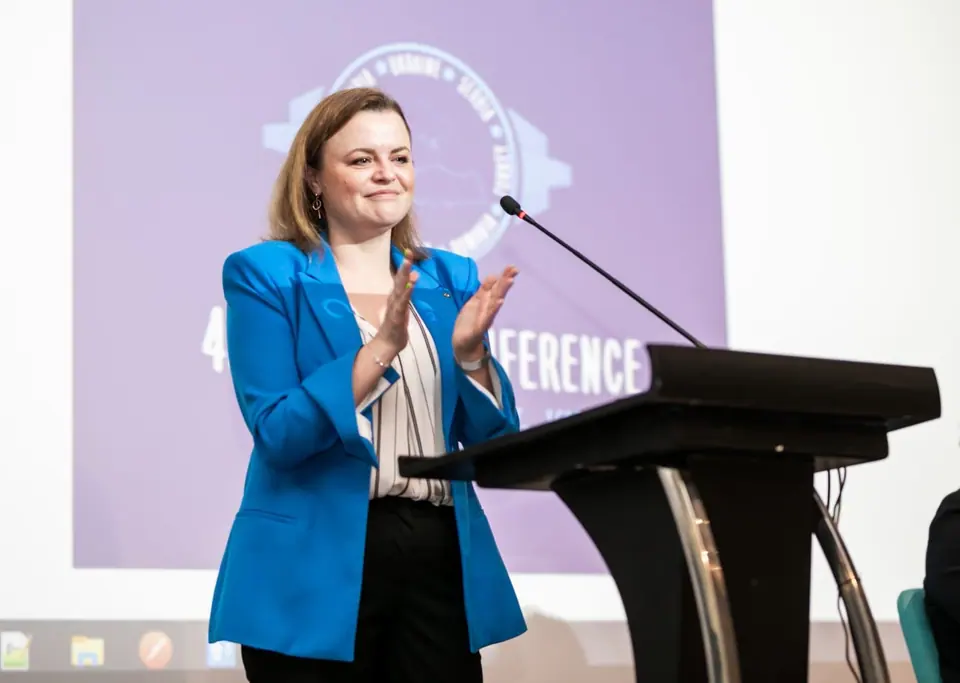
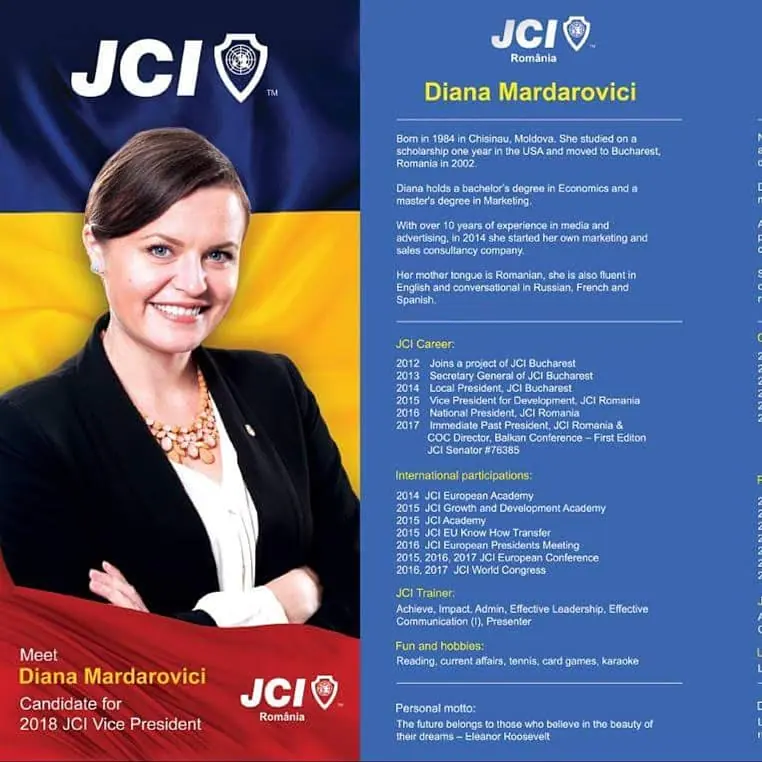
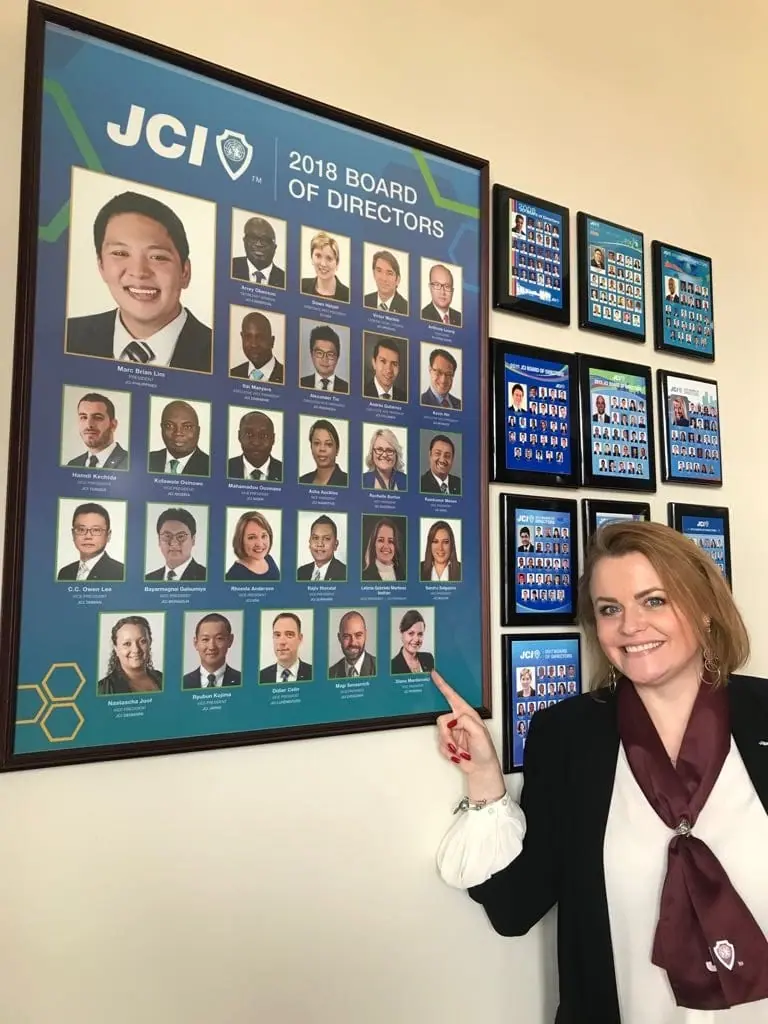
Diana Mardarovici, originally from the Republic of Moldova, came to Bucharest to study, but did not stop there. Together with a group of ambitious young people, she founded a political party with the aim of promoting a new approach based on education, knowledge, skills, and meritocracy. Today, Diana Mardarovici is a General Councillor of the Municipality of Bucharest and a frequent presence on TV shows. She is a JCI member, senator, 2018 JCI Vice President and former JCI Partnerships Director.
Diana, tell us few things about you.
I’ve always believed that systems can be better. Not as an abstract conviction, but as something almost personal: a frustration with the gap between how things are and how they could be. I was born in the USSR in 1984 and experienced change throughout my life. Being part of a family actively involved in the liberation and unification movements in Moldova, I was constantly aware of my circumstances, and the wish for a better future for my people has been part of my basic education.
Early on, I understood something that took others longer to see: policy isn’t background noise. It shapes who gets a chance and who doesn’t, often before anyone even realizes it’s happening. That realization never left me.
Based on that realization, I decided that I would do everything I can to right the wrongs that I see.
JCI was where I first had to lead at real scale, in rooms where the culture was different, the expectations were different, and the very logic of how decisions get made was different.
Today, I serve as a General Councillor in Bucharest and President of the Budget Committee. I don’t take that lightly. The intersection I work at (economic development, public policy, and real impact on real lives) is exactly where I want to be. I care about entrepreneurship not as a buzzword, but as a lived experience: I know what it feels like when the environment rewards initiative, and I know what it feels like when it quietly punishes it instead. I want to build the former.
I care about equal opportunities, especially for women and girls, with the same urgency. And I think about Romania’s place in a complicated, shifting geopolitical moment with a seriousness that keeps me up at night sometimes.
What defines me isn’t the list of roles. It’s what I refuse to do in them. I don’t do symbolic leadership. I don’t believe in the gesture that replaces the decision, or the announcement that substitutes for the result. I believe in accountability, mine included, and in leadership by example.
Everything I’ve done, from business to JCI to politics, connects at the same point: the distance between intention and execution. Closing that distance is the work. It’s always been the work.
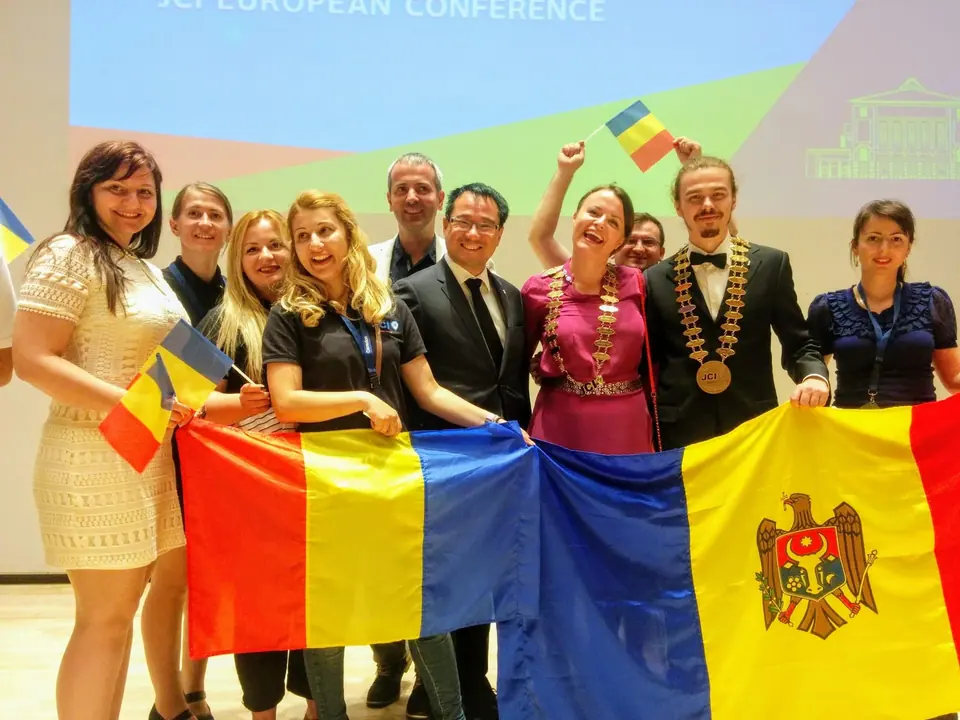
What does leadership mean to you personally, and how has your perspective evolved from your JCI years to your current role in politics?
I would say I learned most of my lessons about leadership in JCI. I also made a lot of mistakes there, and honestly, I’m happy I did, because now I can clearly see how those lessons apply to my political career.
For me, leadership is about purpose. It is about understanding what a team of people believes in, what matters to them, and finding a way to bring all of that together into a larger vision and a common objective. It’s about taking people along on a journey, creating opportunities for others to grow, and helping people continue moving forward even during difficult moments.
But leadership is also about responsibility. About taking responsibility for mistakes and giving credit for success. About being brave and honest enough to aim very high, even if sometimes you fall short. I think too many people associate leadership with perfection, when in reality it is much more about resilience, consistency, and the willingness to keep learning.
I always joke that politics is basically JCI, but with real stakes. Seeing how people’s characters evolved in different situations within JCI gave me a much better understanding of what happens in politics as well. It taught me how to navigate pressure, conflict, and very different personalities without taking everything personally.
And one of the most important lessons I learned is that usually people do not have something against you personally. Most of the time, your objectives and their objectives simply come into conflict. Once you understand that, you stop reacting emotionally and start focusing on solutions, negotiation, and long-term relationships.
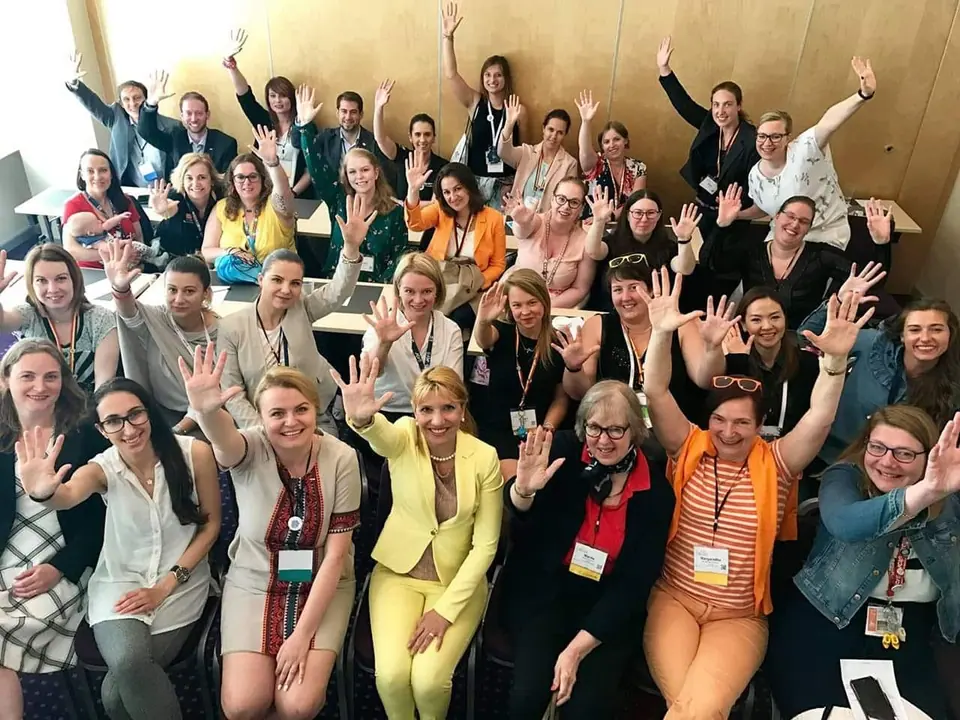
What core values have remained constant throughout your journey, and how do they guide your decisions today?
It’s actually very interesting, because discovering what my core values are was a journey in itself, and a very important part of that journey happened in JCI.
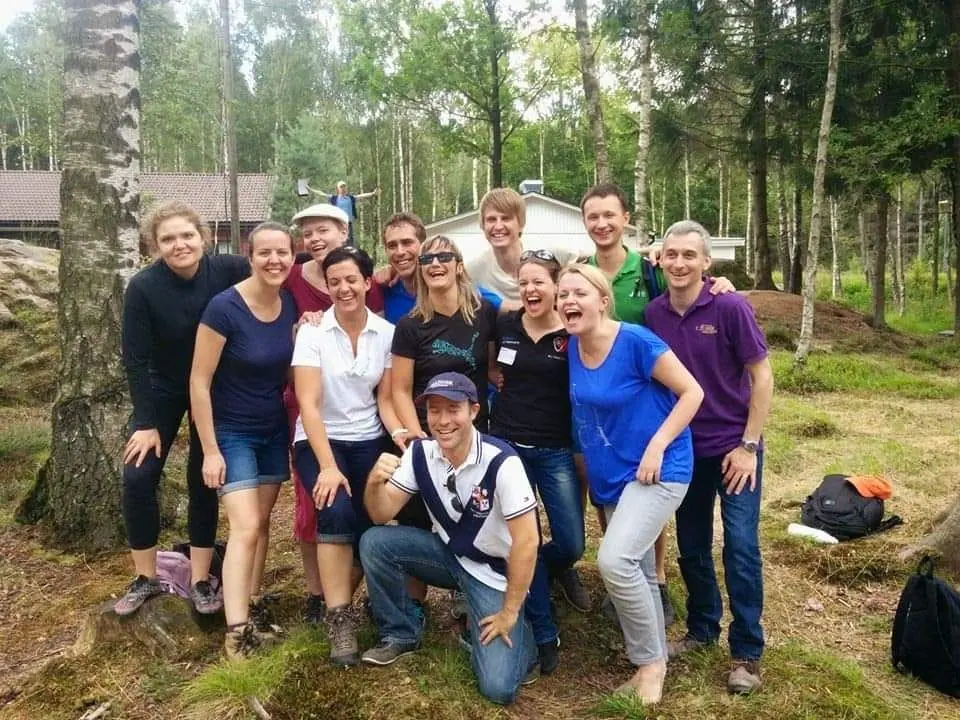
JCI was the first environment where I experienced leadership academies and deep personal development in a real way. I still remember the JCI European Academy in Sweden and the impact it had on me as a person. It gave me the opportunity to really question the way I make decisions, to understand how I was perceived by others, and ultimately to better understand myself. And I think once you understand yourself better, you also become much better at engaging with others, building trust, and bringing people together around a common vision.
One value that has remained constant for me throughout the years is family. It has always been my foundation and the place where I find balance, perspective, and strength.
The second core value is freedom. Freedom has always been extremely important to me, both for myself and for the people around me. I believe people thrive when they are trusted, empowered, and allowed to think independently. Whether in leadership, business, or politics, I’ve always tried to create environments where people feel they have the space to grow, contribute, and express themselves honestly.
And the third core value is integrity. For me, integrity means remaining consistent with your principles even when it becomes uncomfortable or politically inconvenient.
What’s interesting is that values are not static. They evolve with you through time and experience. The way I use my core values today is almost like a decision-making filter. Whenever I face a difficult choice or internal conflict, I try to understand which values are in tension, what matters most in that moment, and what kind of decision I will still be able to stand by later on.
Was there a defining moment when you realized you wanted to step into public service and politics?
I think, for whatever reason, I always knew this was something I would eventually pursue.
Part of it probably comes from my family. My mother was in public service; she was a Member of Parliament and was always actively involved in NGOs and civic movements. She was part of the national liberation movement in Moldova, and my father was also deeply involved in civil society. So growing up, being engaged and contributing to society always felt normal to me. It was never something distant or abstract.
At the same time, I never wanted to enter politics too early. I wanted to first establish myself professionally and gain real experience, both as a professional and as a person. I felt that before stepping into public service, I needed a better understanding of how life actually works outside of politics: the challenges people face, the realities of building something, working with others, succeeding, failing, and growing through experience.
So in many ways, I always knew this path was there, but I was waiting for the right moment.
And when the opportunity presented itself, when I was approached to join a group of young people who genuinely wanted to change things, it simply felt right. That happened in 2017, and I think sometimes the biggest decisions in life are not dramatic. They just feel aligned with who you already are.
Looking back, how did your experience as JCI Vice President for Europe shape you as a leader?
That was probably the greatest experience I had in JCI, by far. It’s one of those years that I know I will remember forever, both because of the incredible opportunities and friendships it brought into my life, but also because of the challenges and personal discoveries that came with it.
I learned a lot about leadership, but also a lot about myself. For example, before that experience, I genuinely believed I would love a career that involved constant travel. And while I absolutely loved the international exposure and the people I met, I also discovered there is a limit to how much traveling I can do while still feeling balanced, happy, and mentally grounded. That experience taught me not only what energizes me, but also what I need in order to function well long-term.
What impacted me most, though, was working with cultures that initially seemed very different from mine. Coming from Romania and Moldova, from a more Eastern and Southeastern European background, I was assigned to the Nordics, and usually people assume there are major differences in mentality, communication styles, and ways of working.
But what I discovered was actually the opposite. I found a surprising amount of common ground with the Nordic way of thinking, especially when it came to values like trust, responsibility, and respect for people’s autonomy.
And I think that experience taught me something very important: even though outwardly we may seem very different as people or cultures, when it comes to fundamental human needs, fears, ambitions, and desires, we are actually much more similar than we think.
What were the most important lessons from JCI that you still apply in your political career?
One of the biggest lessons I learned is that there is almost always common ground, if people genuinely want to find it.
I think most conflicts are not actually about the impossibility of solutions. They happen when people enter conversations, negotiations, or discussions without the real intention of understanding each other or moving toward a solution.
What JCI taught me is that when people come into a conversation with openness, honesty, and the willingness to solve problems together, solutions are almost always possible. Even difficult ones.
At the same time, I also learned that if someone has already decided they do not want cooperation or common ground, there is very little you can do to force that process. And understanding that is important too, because it teaches you where to invest your energy.
So for me, attitude matters more than preparation, titles, or even experience sometimes. The mindset people bring into a room changes the outcome of the conversation more than anything else.
How did working with diverse cultures and teams across Europe influence your leadership style?
One of the most important things I learned during my time as Vice President was the value of truly listening.
I’m naturally an extrovert, and my instinct is usually to communicate, engage, and speak a lot. But during that year, I made a very conscious effort to listen more than I spoke. Not just to listen in order to reply, but to genuinely listen in order to understand.
And I think that became one of the biggest areas of growth for me as a leader. Because once you really start understanding people and accepting that they may communicate, react, or process things differently than you do, then you can actually start building trust and working together much more effectively.
One moment I still remember very clearly was a training session I delivered in Finland. My style is naturally energetic, expressive, and very interactive, probably closer to an American-style training environment. But during that session, the room stayed quiet almost the entire time. People were very thoughtful, very reserved, and there was little visible reaction from the audience.
Honestly, I left the room convinced it had gone terribly.
Afterwards, I spoke to Lauri, who was the National President at the time, and he told me he had heard very positive feedback about the training. I was genuinely surprised, because in my mind, silence meant disengagement. And he simply explained to me: “Finns don’t necessarily jump up and down or react outwardly in the same way.”
That moment stayed with me because it completely changed the way I interpret people and leadership dynamics. I understood that not everyone expresses engagement, enthusiasm, or appreciation in the same way.
So I think my leadership style evolved from needing immediate external validation to focusing on doing my best, understanding the people in front of me, and adapting without losing authenticity. And honestly, that lesson helps me every single day in politics as well.
Politics comes with responsibility, pressure, and public visibility — how do you stay grounded and authentic as a leader?
I think I use the same tool today that I used back in JCI whenever things became overwhelming, complicated, or emotionally difficult to navigate: I ask myself why.
Politics today comes with a huge amount of pressure, visibility, and constant exposure, especially through social media. And sometimes, no matter how balanced you try to be, you become the recipient of a lot of frustration, anger, or even hate.
The way I stay grounded is, first of all, through my family. They keep me connected to reality and to who I am outside of politics. But secondly, whenever things become too intense or emotionally charged, I step back and ask myself why I chose this path in the first place. What is the purpose behind what I’m doing? And is this particular conflict, situation, or battle actually serving that purpose?
That question changed a lot for me over time.
Because I’m naturally very competitive, and for a long time I felt like I had to win every battle that was placed in front of me. But I eventually understood that not every battle is actually yours to fight. And sometimes you can win a small conflict while losing sight of the bigger objective entirely.
So now, whenever things become difficult, I try to step back, look at the bigger picture, and ask myself very honestly: “Is this helping me move toward the purpose for which I entered public service?” If the answer is no, then I’ve learned to let go, remove myself emotionally from the situation, and focus my energy where it truly matters.
How do you balance representing the needs of your community while staying true to your personal values?
Balance comes quite naturally because my core values are very much aligned with the values of the community I try to represent.
And of course, in politics, you never represent absolutely everyone. There will always be people who disagree with you or who have a completely different vision, and that’s normal. That’s actually the beauty of democracy: people have the freedom to choose leaders who reflect their own beliefs and priorities.
But when it comes to the people and communities I work for, I feel deeply connected to them because I’m still immersed in that reality every day. My friends are part of that community, the people I work with are part of it, the conversations I have daily are part of it. I never wanted politics to become a bubble where I lose touch with real life, and I make a conscious effort to avoid that.
I think as long as you remain genuinely connected to people, to their concerns, frustrations, hopes, and everyday realities, then it becomes much easier to stay authentic and make decisions that are aligned both with your personal values and with the people you represent.
For me, that connection to real life is an anchor. And I think it’s one of the most important things a person in public office can protect, because the moment you become disconnected from people’s actual lives, you also risk becoming disconnected from the purpose of public service itself.
What leadership skills from JCI have proven most valuable in navigating political challenges and decision-making?
I found JCI to be an extraordinary training ground for politics and leadership in general, especially when it comes to understanding people, building support, communicating a vision, and navigating elections and decision-making processes.
Even at a local level, I remember running for Local President and having a counter-candidate. And when you really think about it, convincing a room of 40 people to trust you, support your vision, or vote for you is not fundamentally different from politics. Whether it happens in JCI or inside a political party, the dynamics are surprisingly similar. You still need to build trust, explain your ideas clearly, understand people’s motivations, and create alignment around a common direction.
So a lot of what I learned in JCI about running for office translated directly into politics.
Even the advisory system and succession mechanisms in JCI taught me a lot. Of course, politics is a much larger and more complex system, so nothing functions as neatly or as predictably as it can in JCI. But the principles—mentorship, leadership development, strategic positioning, coalition-building, preparing the next generation—they absolutely exist in politics as well.
What advice would you give to young JCI members who are considering a career in public service or politics?
In JCI, everything is accelerated because terms last one year. You learn to deliver quickly, adapt quickly, recover quickly. In politics, mandates are four years, but honestly, sometimes those four years feel exactly like one year in JCI because the pressure and expectations never really stop.
And I genuinely believe that anyone who is considering a political career would benefit tremendously from going through JCI first.
Not necessarily if someone wants to become a career bureaucrat or a technical public servant, but if someone wants to become a politician, a public leader, or someone who mobilizes people around ideas, then JCI is one of the best environments possible to test yourself.
It teaches you public speaking, negotiation, leadership under pressure, how to bring people together, how to explain why your vision matters, and also how to deal with failure, disagreement, and competition in a healthy way.
So my sincere advice to anyone reading this who is considering a political path is: take JCI seriously. Run for positions. Aim high. Push yourself further than you think you can go. Because even if you don’t reach every goal, the lessons and growth you gain along the way are extraordinary and will stay with you for life.
As a woman who transitioned from JCI leadership to politics, what message would you share with other women who aspire to lead?
One thing I remember very clearly from my years in JCI was looking at the Executive Committee on stage and noticing that, some years, there were no women there at all. Thankfully, this has improved a lot over time, and I genuinely believe JCI has made important progress toward more balanced leadership representation. But back then, whenever I raised the issue, I often heard the same answer: “We don’t see gender.”
And honestly, I always found that phrase deeply unhelpful and, in some ways, invalidating.
Because when you tell a woman that you “don’t see gender,” what you are often really saying is that the absence of women in leadership is somehow natural or irrelevant. But representation matters precisely because people notice when they are not represented.
If an entire leadership structure is made up only of men, the implicit message becomes that the best people the organization had to offer that year were exclusively men, and I simply do not believe that is true. Not in JCI, not in politics, not anywhere.
And the second issue with that phrase is this: people usually don’t “see gender” when their own gender is already represented. I noticed it because mine wasn’t.
What changed my perspective even more was seeing how easily organizations accept representation mechanisms in other contexts. For example, in JCI, having Executive Vice Presidents from different areas of the world is completely normal and widely accepted because people understand the importance of balanced representation. Nobody feels diminished by that. People understand that diversity of perspectives strengthens leadership.

If this story inspired you to become a JCI member, find the National Organisation closest to you.